
As Florida State Searches for a Coach, John Garrett’s Record Deserves a Closer Look
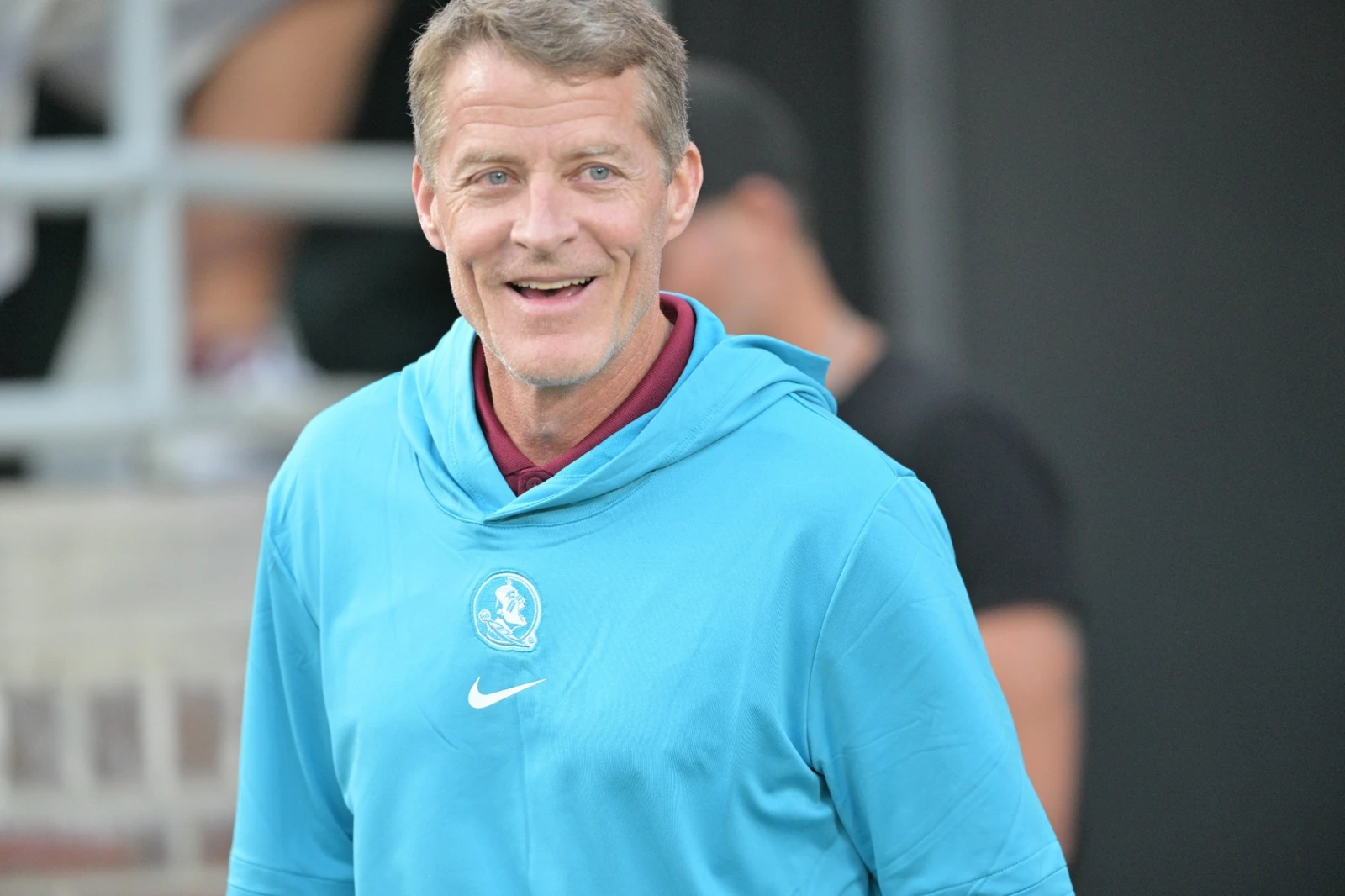
Florida State is searching for someone to lead its football program. The work of the man helping assemble the roster deserves attention as well.
John Garrett is reportedly pushing to bring more high school recruits into the Seminoles’ current class as the university searches for its next head coach. Recruiting must continue during that process, but the activity raises a larger question: Has Garrett done enough in his first year to earn Florida State’s confidence moving forward?
His transfer additions have supplied several important contributors, particularly on defense. Other additions have delivered less convincing results, while players who left Tallahassee have continued producing elsewhere. The current recruiting class, meanwhile, still has needs that will require attention before signing day.
Garrett inherited problems when he returned in January. He also took a job that carries responsibility for fixing them.
Defensive transfers have been his strongest work
Chris Jones and Rylan Kennedy give Garrett a strong place to start when defending his personnel decisions. Jones leads Florida State with 71 tackles through 10 games, while Kennedy has recorded six sacks and 9½ tackles for loss. CJ Richard Jr. has contributed 63 tackles, and Nehemiah Chandler has added two interceptions and six pass breakups.
Those additions have provided meaningful help at positions where Florida State needed it. Jones has become a productive presence at linebacker, Kennedy has supplied pressure up front, and Richard and Chandler have contributed in the secondary. Garrett shares credit with the coaches who evaluated and developed those players, but their performances belong among the big successes of his first year.
The offensive results have been less consistent
Ashton Daniels has been both a source of offense and a reason for frustration. He has thrown for 2,309 yards, 14 touchdowns and 12 interceptions while adding 440 rushing yards and 13 rushing touchdowns. His ability to run has given Florida State another way to score, but the interceptions have complicated an already uneven passing attack.
Garrett explained before the season that Florida State chose to pursue value at quarterback rather than spend on the most expensive options. That decision was made with the rest of the roster in mind. For fans frustrated by Florida State’s search for consistent quarterback play since 2023, that approach offered little reassurance.
Tre Wisner has contributed 305 rushing yards and 201 receiving yards, while Desirrio Riles has caught nine passes for 86 yards and a touchdown. Their offensive production has been limited compared with the impact Florida State needed across the unit. Wisner’s role also raises questions about how the Seminoles allocated their resources at running back, though his compensation has not been independently verified.
The offensive line additions have provided mixed returns as well.
The talent that left matters just as much
Garrett’s evaluation must include the players Florida State lost.
Earl Little Jr. departed after leading the Seminoles with 76 tackles and four interceptions in 2025. Through nine games at Ohio State, he had recorded 54 tackles, five pass breakups, two fumble recoveries and a forced fumble. Florida State lost an established defender who has continued contributing at another major program. Whether that production justifies Ohio State’s investment is difficult to assess without verified financial details.
Lawayne McCoy’s production at Louisville presents another concern. An ACC statistical report covering Louisville’s first nine games credited him with 25 catches for 513 yards and four touchdowns in seven appearances. That is the kind of production a program hopes to receive after investing in a young receiver’s development.
Neither departure proves Garrett personally decided those players were expendable. Those decisions involved the broader staff, though the extent of each person’s involvement is not publicly established. Retention involves money, playing time, relationships and the player’s preferences, and the details of those discussions are not public. Garrett’s precise role remains unclear, but keeping productive talent is part of the job.
The recruiting class falls short of Florida State’s standards
Florida State has prospects worth keeping in its 2027 class, including Ta’Shawn Poole, Sam LeJeune, Sean Green and Jayden Miles. But the overall class has not reached the level the Seminoles need to rebuild a championship roster.
The recruiting services differ on Florida State’s standing. Rivals’ latest published breakdown placed the Seminoles No. 34 nationally and sixth in the ACC, while a November 13 report had FSU falling to No. 61 following Za’Kari Johnson’s decommitment.
For a program with Florida State’s history, location and championship expectations, competing outside the nation’s top recruiting classes is not good enough. Evaluations matter, and lower-rated prospects can become excellent players, but FSU cannot consistently ask its coaches to overcome a talent gap against the programs it expects to beat.
The offensive line remains a particular concern. David Giwa became Florida State’s first offensive line commitment of the cycle in November, and he is a junior college prospect.
The coaching change has made recruiting harder. Prospects want to know who will coach them and how they fit into the next staff’s plans. Garrett cannot answer all those questions himself, but the uncertainty does not erase the shortcomings of the class assembled before the change.
New offers should not outweigh the full evaluation
Continuing to recruit is necessary. Whether Garrett should remain in charge of that effort is a separate decision.
Garrett has found players who have helped the Seminoles. He has also been part of a personnel operation that has lost productive talent and has yet to establish a complete recruiting foundation.
I believe the new coach probably will not like his current recruiting efforts and will not retain him.