Three noticeable differences in Florida State’s defense under Ernie Sims
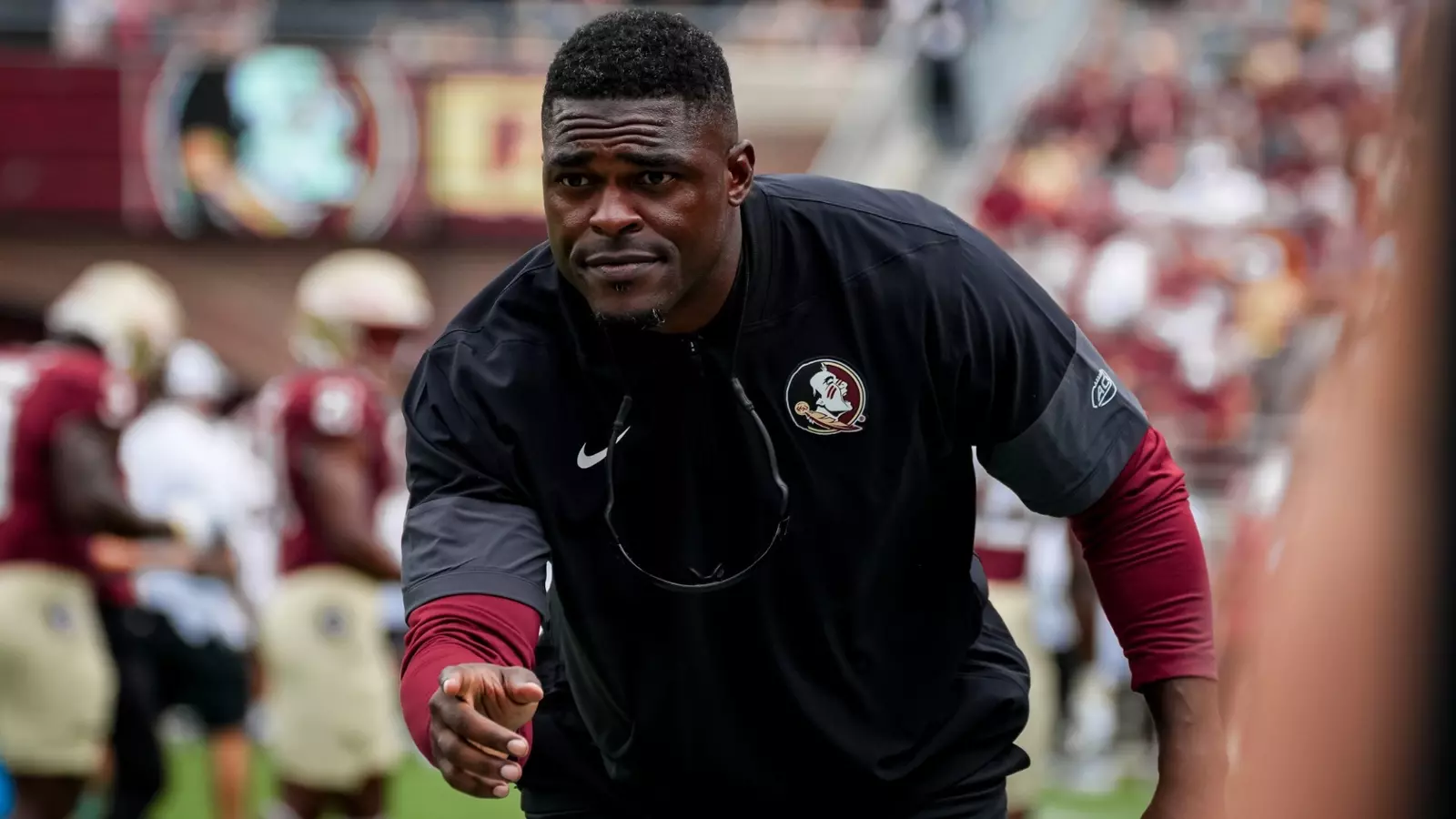
Florida State’s defense looks like it has some life again.
Since Ernie Sims took over as interim defensive coordinator, the Seminoles have won consecutive road games at Boston College and Pitt. Friday’s 16–10 victory provided the strongest example yet of a defense capable of carrying the team when the offense struggles.
Florida State is playing with more energy, getting important contributions from its linebackers and using a different defensive front to create opportunities for pressure.
1. More physicality and energy
The first noticeable difference is how aggressively Florida State is playing.
Against Pitt, defenders attacked ball carriers and competed through the end of possessions. Even when penalties gave the Panthers second chances, the Seminoles continued finding ways to get a stop.
That showed up most clearly late in the game. Protecting a six-point lead, Florida State needed to prevent a touchdown on Pitt’s final possession. The defense finished the job, capping an afternoon in which the Panthers converted only one of four fourth-down attempts.
To me, the biggest change is that players look more comfortable attacking. There appears to be less hesitation, and the energy carries from one defender to the next.
Deamontae Diggs was a good example against Pitt. He finished with three tackles, including two for loss, and added a pass breakup. Those are the kinds of disruptive plays Florida State needs from its defensive front that it did not get earlier in the year.
Sims’ personality seems to fit what this group needed. The defense is playing with an urgency that has been missing too often this season.
2. The linebackers are making bigger plays
The increased impact from Florida State’s linebackers has been another encouraging development.
Chris Jones led the Seminoles with seven tackles against Pitt. Caleb LaVallee finished with six, including five solo stops, while Omar Graham Jr. contributed five tackles, one tackle for loss and a pass breakup. Graham Jr. has made the biggest jump in my opinion.
The timing of their contributions mattered as much as the totals.
LaVallee delivered one of the biggest plays of the night when he broke through for a fourth-down sack of Corey Dailey. Graham then helped finish the game, making a tackle for loss on third down before pressuring Dailey into an incompletion on fourth down during Pitt’s final possession.
Those plays changed possessions and protected the lead. Florida State needed its linebackers to do more, and against Pitt, they were directly involved in deciding the game.
With Sims also coaching the position, it is encouraging to see that group becoming such an important part of the defense’s improvement.
3. The shift toward a 4-2-5 is creating opportunities for pressure
The most noticeable schematic adjustment has been the move away from Tony White’s 3-3-5 toward more four-man fronts and 4-2-5 looks. The staff has also simplified responsibilities to help players react faster.
Four defensive linemen give Florida State another player at the line of scrimmage and allow its edge rushers more opportunities to attack from the front. The formation also leaves room to bring a linebacker when the matchup calls for it.
The Seminoles finished the game with two sacks and seven tackles for loss.
The encouraging part is how the changes appear to work together. A simpler approach can help players trust their assignments, play faster and take advantage when Sims brings pressure.
The defense is giving the Seminoles a chance to finish the season with something to build on. Against Pitt, it was the reason they won.
Two Schematic Tweaks That Have Unlocked FSU’s Defense
Four-man front simplifies the backend
Under Tony White’s 3-3-5 defensive scheme, the defensive backs were asked to act as hybrids with a bigger role in run support and blitzing, while also having to focus on lockdown pass coverage. This formation and scheme can be effective in third-down scenarios or definite passing downs, but asking your 18–22-year-old defensive backs to have so many responsibilities on a down-to-down basis is asking for miscommunications and defensive lapses to be a regular occurrence.
When Coach Sims came in as interim defensive coordinator, he clearly prioritized simplicity with coverage, allowing his thin defensive back room to play fast and swarm to the ball. With less pre-snap disguise and aggressive blitz rates, the secondary has been able to play free with more traditional, defined roles.
This has been very prevalent in the first two games under Sims’ defense with players like Nehemiah Chandler, CJ Richard Jr. and Charles Lester. Chandler was an instant-impact player against Boston College, where he had an interception and two crucial pass deflections that helped decide the game. Richard has recorded 10 combined tackles over the past two games, along with a couple of important pass deflections, including one that should have been an interception.
Meanwhile, Lester showed his former four-star abilities against Pitt, constantly making good breaks on the ball and finishing with two key pass deflections. Simpler coverage shells have allowed these players to read the quarterback’s eyes cleanly and play with aggression at the catch point, resulting in improved play from the entire group.
Adjusted roles on the D-line let linemen play to their strengths
Rather than forcing undersized edge rushers to play primarily inside or asking athletic linemen to hold multiple gaps in Tony White’s 3-3-5 system, Ernie Sims’ shift to a four-man front has put players in natural spots to attack.
Against Pitt, moving Tae Diggs inside to a 3-technique, after he had spent the majority of his snaps on the edge earlier this year, allowed him to use his quickness to shoot gaps against slower interior guards instead of getting shut down by tackles. The move paid off immediately, as Diggs finished with three solo tackles, two tackles for loss and a batted pass that turned into a Rylan Kennedy interception.
That shift also freed Mandrell Desir from being stuck at nose tackle against interior double teams, letting him rotate on the outside. This allowed him to work well with other pieces on the D-line, including his brother Darryll, a duo that finally came alive late in the season when the twins teamed up for a first-quarter sack.
The reshuffled front also gave Jalen Anderson the opportunity to take on a heavier workload at the Jack spot, where he played very solidly over the past two weeks, including leading the defense with three quarterback hurries against Pitt. By aligning the defensive line where their physical traits fit best, Sims generated consistent pressure without having to compromise his secondary with a higher blitz rate.